A hundred Finno-Ugric writers in Yugra — and not one word «Erzya»
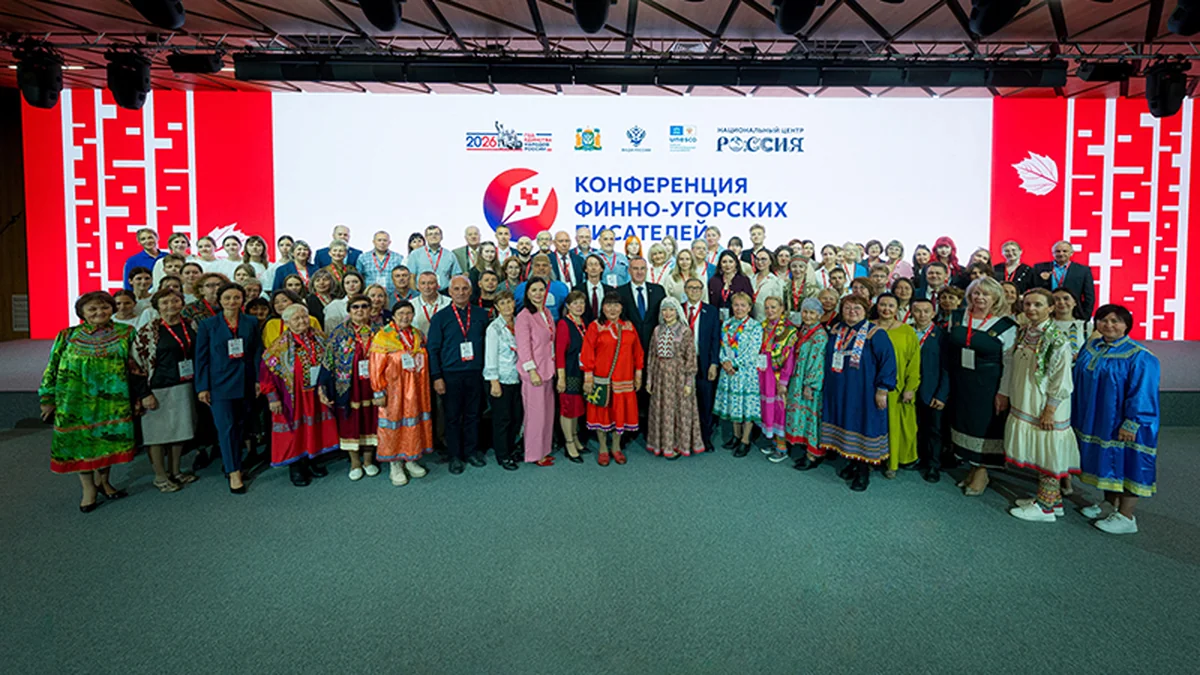
From 7 to 12 September 2026, Yugra — the Khanty-Mansi autonomous area in western Siberia, in the towns of Beryozovo, Pyt-Yakh and Khanty-Mansiysk — hosted the 4th Conference of Finno-Ugric Writers. According to the Tatar-Inform news agency, 107 writers, translators, publishers and researchers registered, coming from eight Finno-Ugric regions of Russia, Mordovia among them, as well as from Moscow, St Petersburg, Tyumen and Tobolsk. We read the available reports by the organisers and the regional press — and found in them not a single Erzya name and not a single mention of Erzya literature, the literature of the Finno-Ugric people of the Volga region to which this portal is devoted.
The conference itself is the principal regular forum of Russia's Finno-Ugric literary world. It is run by the State Library of Yugra; Yeremey Aypin, president of the Association of Finno-Ugric Writers, opened the plenary sessions, and greetings came from Igor Barinov, head of the Federal Agency for Ethnic Affairs, and from Yugra's governor Ruslan Kukharuk, who linked the forum's theme to the state-proclaimed Year of the Unity of the Peoples of Russia. The programme included a research section on Finno-Ugric literatures, a round table on translation, literary workshops, the "Poetic Duels" tournament, the Yugorika book fair — and the nationwide dictation in the languages of the peoples of Russia, which we recently covered in connection with the twenty Erzya papers written at the teacher-training university in Saransk.
The difference between regions shows in how they presented their people. The Komi Republic named its delegation in full — Nina Obrezkova, Alyona Shomysova, Alexander Gerasimenko, Diana Kholopova, Darya Filitova; the journal Region and the Komiinform agency ran separate stories about the republic's "masters of the word". The Tyumen region wrote about its delegation at the previous conference already. Mordovia, in every report available to us, remained a line in the list of regions: no names, no works, no languages. The words "Erzya" and "Moksha" did not occur in the coverage of the conference even once — neither in the announcements nor in the closing reports.
Of course, the absence of names in the news does not mean the absence of people in the hall. The organisers of previous conferences published full participant lists, and it cannot be ruled out that among the 107 registered there were authors writing in Erzya; we could find no reports in Mordovia's own media about the composition of its delegation. But that is precisely the point: the question here is not about people but about the name. Even if Erzya writers were present, in the public picture of the conference — the one a news reader from Kaliningrad to Surgut will see — their language was never heard. The people's literature was represented by the word "Mordovia", inside which the Erzya name is inaudible.
Erzya literature, meanwhile, has names to give. The journals Śatko and Čiľiśema are published in Erzya; poetry and prose are being written. We have discussed its problems more than once — the children's bookshelf that "ends at age ten", the detective novel never written — but a literature's problems and its invisibility are different things. The pattern into which this invisibility falls is familiar to our readers: in the census the Erzya dissolve into the consolidated category "Mordvin"; in the calendar, Erzya Language Day has been renamed the All-Russian Day of the Mordvin Languages; now, on the main literary platform of the Finno-Ugric world, the people is represented only by the name of the republic. Who assembled Mordovia's delegation and shaped its public presentation, the organisers and the republic's agencies did not say, and we will not guess on their behalf. We record the result: on the map of Finno-Ugric literature drawn in Yugra in September 2026, the Erzya voice is not labelled.
Valks will be watching for Erzya names in the conference's final documents and in the reports of the Association of Finno-Ugric Writers. And to Erzya authors, wherever they live and publish, a reminder: our pages are open for news of new books and texts — and we call writers by the names they call themselves.