Erzya enters the IBBY—UNESCO collection — though not as a book of its own
For the first time, Erzya — the Finno-Ugric language of the Volga region to which this portal is devoted — is represented in the Collection of Outstanding Books for Children and Young Adults in Indigenous and Endangered Languages, assembled by the International Board on Books for Young People (IBBY) together with UNESCO. The selection includes FUgrics: Comics from the Finno-Ugric World, an anthology in which Erzya appears alongside Karelian, Veps, Udmurt, Komi, Komi-Permyak, Khanty, Mansi, Mari, the Saami languages, Seto, Moksha, Votic and Izhorian, as well as Russian and English. There is, however, no stand-alone Erzya title on the published list — a qualification no less important than the news itself.
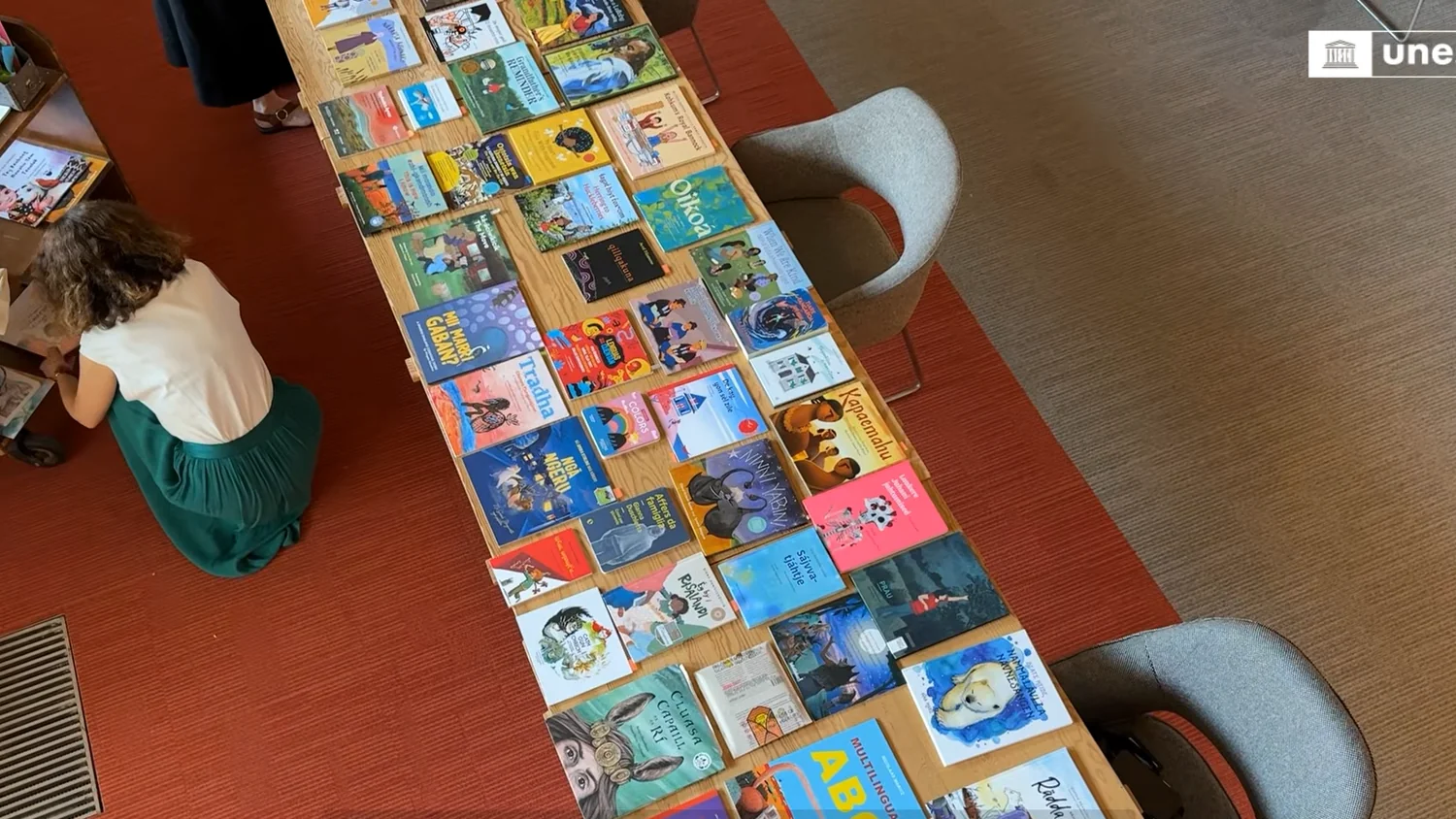
This is a completed selection, not an application: the Russian section of IBBY published the final list on 10 August, and the collection was formally presented at the 40th IBBY World Congress in Ottawa on 6–9 August 2026. In all, according to UNESCO, nearly 170 books in more than 150 languages were chosen from over 500 submissions; eligible works had been published between 2018 and 2025 — picture books, fiction, biographies, comics and non-fiction. The international jury judged not only the quality of text and illustration but each book's contribution to preserving a language and passing it on to children.
FUgrics was created by the artist Sanna Hukkanen and the linguist Anna Voronkova; the 125-page anthology was published in Finland in March 2020. The book grew out of Living Language, a project whose participants use comics to support languages being pushed out of public life. The stories were written by speakers of these languages from Russia, Finland, Norway and Estonia — journalists, teachers, librarians, museum workers and community activists. In a project like this, a comic is not an illustration to a scholarly description of a language but a modern text in its own right, able to speak of family, history, everyday life and the pressure of the majority. The language appears not as a museum exhibit but as a way of talking to the reader.
Inclusion in the collection gives the Erzya text international visibility. According to IBBY Russia, the selected books will be shown at major international book fairs and in travelling exhibitions around the world — reaching the professional audience of publishers, librarians, translators and researchers of children's literature. The collection's creators link children's books directly to language survival: in IBBY's view, a child's right to read includes the right to read in their own language and to recognise themselves in a book's heroes, while UNESCO sees the collection not only as recognition of existing works but as a stimulus for new ones.
Yet the news has a second layer. What entered the collection is not a separate Erzya children's book but a multilingual anthology in which Erzya is one of fifteen languages. The list of books from Russia includes stand-alone titles in Veps, Dolgan, Yakut, Komi and Tatar, with others — in Buryat, Kabardian-Circassian and Khanty — nominated by other organisations. There is no separate Erzya title among them. This takes nothing away from FUgrics: the jury recognised the book's artistic and public value, and an Erzya text now stands on an international shelf. But the result exposes the same weak point we described in our article about the bookshelf that "ends at age ten": Erzya children's literature lacks modern stand-alone books — the kind that could pass an international selection on their own, without neighbours under the same cover.
The inclusion of FUgrics should therefore be read not as a conclusion but as a benchmark. There is a Veps book on the list — which means the bar is reachable even for a language with far fewer speakers than Erzya. The next task is for the next selection to feature a separate book on the international shelf, created entirely in Erzya and for the Erzya child. Valks is ready to help its future authors with what we do best — the dictionary, children's vocabulary and native-speaker audio — and we will be following where the collection travels and who reads its Erzya pages.